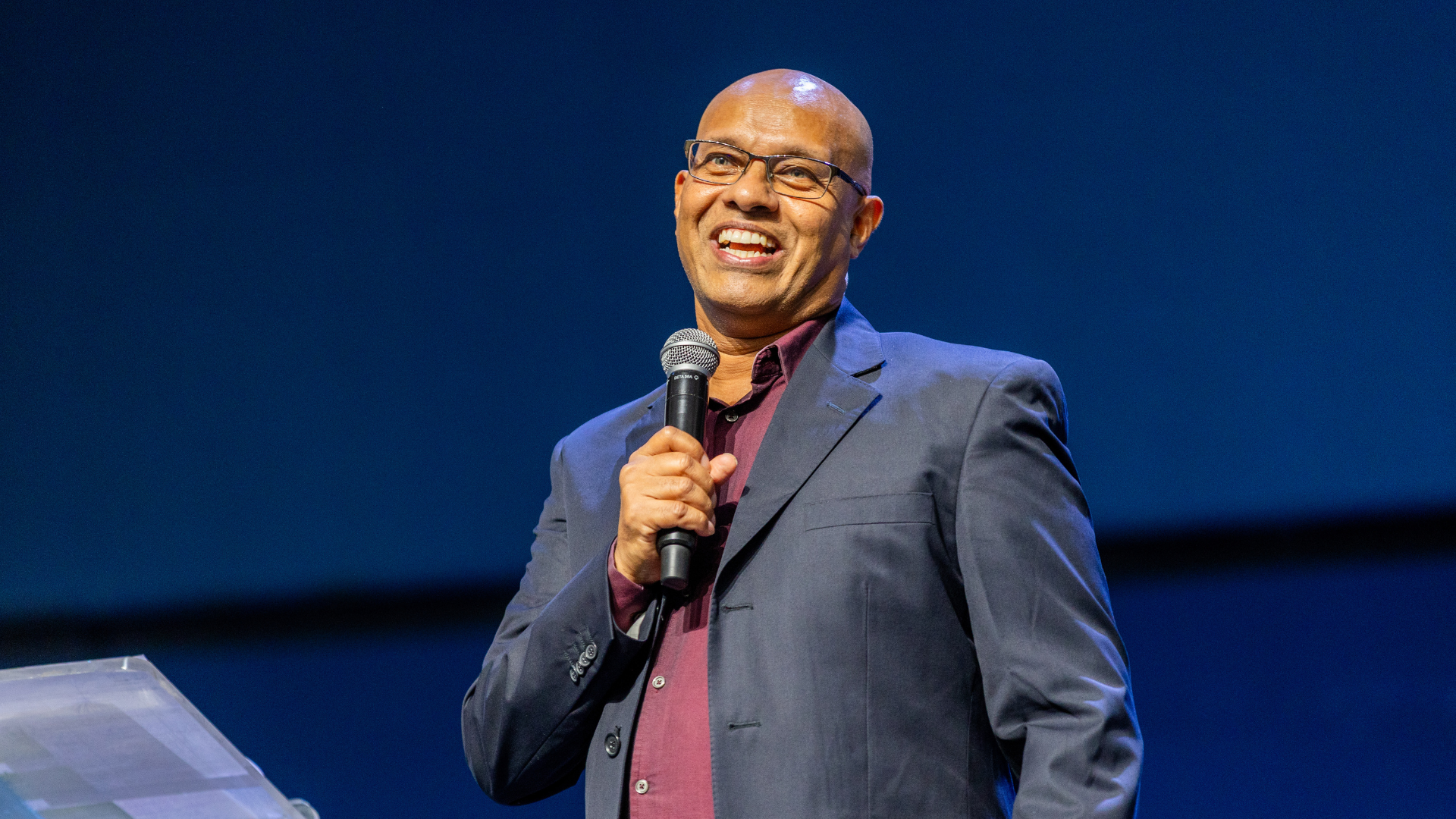
The Way God Works
by Pastor Peter Simon
07 June 2026
Key Texts: Ezekiel 22:30; Luke 10:1-2; Acts 6:7-9; Acts 9:36; Acts 21:8-9; John 6:1-13; 1 Kings 17:7-16; Judges 7; Judges 15:15; 1 Samuel 17; John 11:1-44; Isaiah 42:8; Ephesians 2:8-9; Romans 3:27
Theme: God's method is always ordinary, willing people -- and he characteristically steps into action precisely when believers confess that they do not have enough, that it cannot be done, or that it is too late, because these are not obstacles to his work but the very conditions that invite it.
God's Method Is Always People
The opening text of this message is Ezekiel 22:30: God sought for a man among them that should make up the hedge and stand in the gap before him for the land -- but found none. The tragedy of that verse is not in what God intended to do but in what he could not find: a willing person through whom to work. This is the consistent pattern of Scripture. God's method of acting on earth has always been through people. When he wanted to preserve humanity, he found Noah. When he wanted to raise a nation that would bring the Saviour into the world, he found Abraham. When he wanted a woman to play a vital role in the lineage of Christ, he chose Ruth. When the time came for the Son of God to enter the world, he chose Mary and Joseph.
Jesus himself reinforced this method during his earthly ministry. He invested in twelve disciples so that when he ascended, they would carry the work forward. But the scope of his search was wider than twelve: Luke 10:1-2 records that he sent out seventy others -- unnamed, ordinary people given authority to heal the sick and proclaim the kingdom. The harvest, Jesus said, is plentiful, but the labourers are few. The gap is not a shortage of God's power; it is a shortage of willing people. Every believer, regardless of background or origin, is a candidate for the gap.
Application:
Name one area of your church, community, or workplace where you can see a clear gap that needs someone to step into -- and ask God specifically whether he is calling you to stand there.
Ordinary People: No Special Credentials Required
One of the most reassuring threads in the book of Acts is the deliberate inclusion of ordinary men and women in the work of God. Acts 6:7 records that the number of disciples multiplied -- not merely added -- and among those named is Stephen, a deacon, a regular man called to serve tables who became so filled with the Holy Spirit that he performed great wonders and ultimately faced death without fear. Acts 9:36 introduces Dorcas, also called Tabitha, a woman described simply as full of good works and charity. Acts 21:8-9 mentions Philip the evangelist and then, almost in passing, his four daughters who prophesied -- not only the father but his children, young women, were vessels through whom God spoke.
These examples are placed in Scripture not to celebrate exceptional individuals but to demonstrate that God can use regular, ordinary people in every season of life and every place of calling -- whether behind a pulpit or in the marketplace. The question God is asking is not about gifting, credentials, or the size of the town one comes from. It is a simpler question: can I find you? Can I find a willing heart that says, here I am, Lord -- use me?
Application:
Resist the tendency to disqualify yourself from serving God on the basis of ordinariness -- and commit to one specific act of availability in your church or community this week.
When We Pray, God Works
There is a practical principle woven through this message: when believers work in their own strength, they produce what human effort can produce -- but when they pray, God works. This is not a call to passivity but to the right order of dependence. When preparation is driven by human capability alone, things move forward but God is not in the picture. When prayer is genuinely sought and a community begins to hunger before God, something shifts in the spiritual realm.
The youth camp described in this message illustrates the pattern clearly. Early preparations were capable and organised but spiritually flat. When a small group gathered to pray earnestly and said to God, something has to change, the atmosphere began to shift. Registration numbers that had stagnated suddenly grew. Finances that had seemed short were provided. Services that had felt ordinary began to carry the weight of God's presence. Prayer did not replace preparation; it invited God into the preparation. That is the sequence the early church modelled -- Acts 6:7 records multiplication, not mere addition, because prayer and the word were at the centre.
Application:
Before your next significant act of service or planning, set aside specific time to pray before you strategise -- and invite God into the work before you begin.
When There Is Not Enough: God Steps In
The first condition that invites God's action is the honest confession: I do not have enough. When the widow of Zarephath told Elijah she had only enough flour and oil for one last meal before she and her son would die, that confession of insufficiency was the moment God moved through the prophet to multiply what she had (1 Kings 17). In John 6, when Jesus asked the disciples how they were going to feed five thousand men, they reported what they had: five loaves and two fish -- not enough. But scripture records that Jesus had in mind what he was going to do before the disciples voiced their inadequacy. Their confession of not enough was not news to him; it was the moment he had been waiting for.
The same principle holds for any arena of life or ministry. When a believer looks at the calling before them and concludes that their resources fall short, that honest acknowledgement is an invitation. God does not step in when people feel sufficient; he moves when they turn to him and say, Lord, I cannot do this without you. Willingness and obedience in the face of inadequacy are the conditions under which God begins to work.
Application:
Bring the specific area in your life where you feel most insufficient before God today, name it honestly, and ask him to show you what he already has in mind.
When It Cannot Be Done: God's Arithmetic
The second condition that releases God's action is the confession: it cannot be done. Gideon assembled thirty-two thousand men to face the Midianite army. God said it was too many, and reduced the force first to ten thousand, then to three hundred. At that point Gideon had no human explanation for how the battle could be won -- and that was precisely when God said he would go with them (Judges 7). Samson was handed a jawbone of a donkey as his only weapon and slew a thousand Philistines (Judges 15). David approached Goliath without armour, with a sling and five stones, and killed the giant that no trained soldier had dared to face (1 Samuel 17). In every case the means were absurd by human calculation, and the result was unmistakably God.
The principle is consistent: God does not want the believer's strength and wisdom as the foundation of his work -- he wants willing hands placed in his. When the task looks impossible, whether it is a financial commitment, an act of ministry, a step of reconciliation, or an obedience that makes no human sense, and the believer turns to God and says, I cannot do this, that is when God says: now we can begin. He is not looking for capability; he is looking for surrender.
Application:
Identify one thing God has been calling you toward that you have held back from because it seemed impossible -- and take the first step of surrender toward it today.
When It Is Too Late: God and Time
The third confession that opens the door to God's action is: it is too late. Lazarus had been in the tomb for four days when Jesus arrived. His sisters said what every human instinct would say: if only you had come sooner. In their reckoning the moment had passed. But Jesus had already declared, I am the resurrection and the life (John 11:25) -- and he proceeded to demonstrate it. Lazarus walked out of the tomb. The miracle was not diminished by the delay; the delay made the miracle undeniable. Jesus used the very lateness of the hour to reveal a dimension of his power that an earlier arrival would not have shown.
God's sense of timing does not align with human calendars or human urgency. What feels irreversibly late -- a relationship too far gone, a calling too long delayed, a season too far spent -- remains within his reach. A worship leader who knelt in his room before the final night of camp, overwhelmed and tearful, and prayed, God, I cannot do this, found that God moved powerfully that evening. For God it is never too late for a miracle. His timing is not governed by what seems past; it is governed by his perfect knowledge of what is still possible.
Application:
Bring before God one situation in your life where you have concluded it is too late -- and ask him to show you whether he has already set in motion what you cannot yet see.
Why God Works This Way: Glory, Humility, and Faith
Scripture gives three reasons for why God works through insufficiency, impossibility, and apparent lateness. The first is Isaiah 42:8: God will not share his glory with another. When the result exceeds every human explanation, the credit cannot be claimed by the person who was used -- the glory belongs entirely to the one who made it happen. The second reason is Ephesians 2:8-9: salvation, and by extension every work of God, is by grace so that no one can boast. When God works through what is insufficient and impossible, the vessel has nothing to boast about -- the outcome is visibly his alone.
The third reason is Romans 3:27: faith is established. When God acts through what human wisdom would have ruled out, the faith of the believer is no longer rested on their own ability or good works but on the power of the living God. Each occasion of God working through weakness builds a testimony that strengthens faith for the next challenge. The believer who has seen God multiply the insufficient, accomplish the impossible, and redeem the late finds it progressively easier to place their hand in God's the next time the situation looks hopeless. This is the way God works -- not to diminish the believer, but to establish them in genuine, unshakeable faith.
Application:
The next time you are tempted to hold back from a step of obedience because you feel unqualified or under-resourced, recall one specific moment when God worked despite your inadequacy -- and let that memory anchor your faith forward.
Life Group Reflection Questions
1. Ezekiel 22:30 records God searching for someone to stand in the gap -- and finding no one. Jesus echoed the same concern: the harvest is plentiful but the labourers are few. Where in your life, church, or community do you see a gap that needs someone to step into -- and what has stopped you from considering yourself a candidate for that gap?
2. The message draws a sharp distinction: when we work, we work -- but when we pray, God works. Think about a recent project, challenge, or area of ministry in your life. How much of your effort was preceded by genuine prayer, and how much was driven by your own capability? What would it look like to genuinely prioritise prayer before strategy?
3. In John 6, before Jesus fed the five thousand, scripture says Jesus had in mind what he was going to do -- he already knew, even as the disciples reported they did not have enough. In what area of your life right now do you feel most insufficient? What would it mean to trust that God already has in mind what he is going to do -- even before you have voiced the need?
4. Gideon's army was reduced from thirty-two thousand to three hundred before God said he would go with them -- because God wanted the victory to be unmistakably his. Has there been a time when God stripped away your resources or plans before acting? Looking back, what did that season reveal about the relationship between human sufficiency and God's glory?
5. The three confessions in this message -- it is not enough, it cannot be done, and it is too late -- are presented not as failures of faith but as the very conditions that invite God's action. Which of these three most honestly describes where you find yourself right now -- and what would it look like to move from that confession into an act of willingness and surrender?
Closing Summary
This message traces a single, consistent thread: the way God works is through people -- ordinary, insufficient, willing people -- and he moves most powerfully precisely when those people reach the end of their own ability. From Ezekiel's search for a man to stand in the gap, to Jesus sending out seventy unnamed disciples, to the widow with her last handful of flour, to Gideon's three hundred, to Lazarus in the tomb -- the pattern is always the same. God does not begin when believers feel ready; he begins when they confess they are not. He withholds his fullness not to frustrate but to ensure that the glory of what is accomplished cannot be credited to human effort. The call of this message is to place willing hands in the hands of God -- to say honestly, I do not have enough, it cannot be done, it is too late -- and then to watch what the Almighty does when a surrendered life becomes his method.


