Building a Great Church
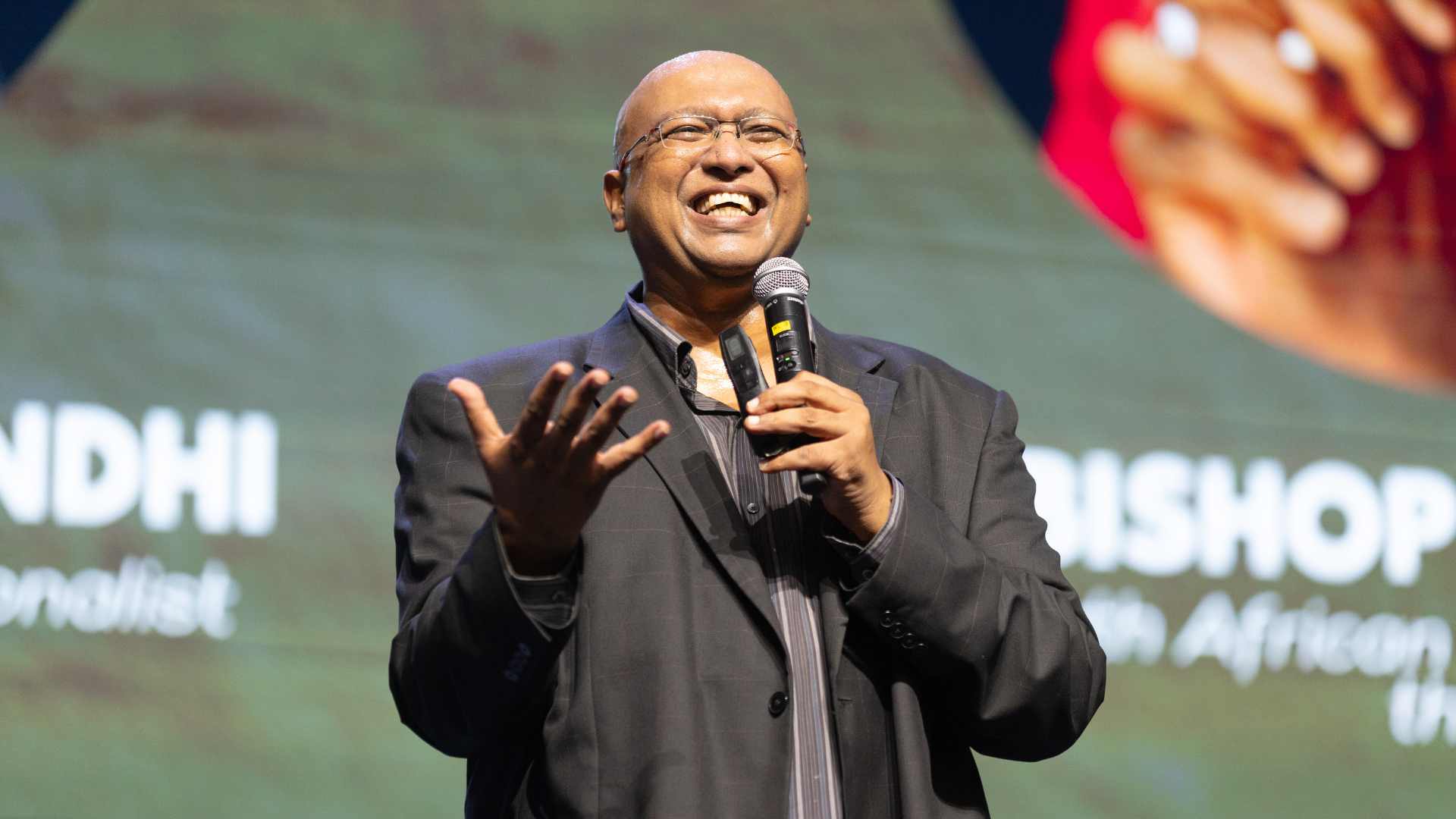
by Pastor Sean Prasad
17 May 2026
Deborah: A Mother Who Changed the Road
Judges 5:6-7 describes a season of national paralysis: the highways were deserted, village life had ceased, and fear had shut down the ordinary rhythms of community. Into that climate, one voice declared, "I, Deborah, arose a mother in Israel." Deborah held the offices of prophetess, judge, and military leader, yet she did not invoke any of those titles. She stood as a mother. That posture was what God used to alter the course of a nation - not positional authority but maternal courage.
The principle extends beyond biological motherhood. Every believer, in whatever sphere of influence they occupy, carries the capacity to make a stand that changes the road for those who come after them. The highways of a life, a family, or a community can be reopened when one person chooses to arise. The season of paralysis does not end because circumstances change; it ends because someone stands.
Identify the area of your life or community where the road has been deserted, and ask God to give you the courage to arise and make your stand there.
The Foundation of Unity: One Heart, One Soul
The early church in Jerusalem provides one of only two detailed models of the gathered community in the New Testament the other being the church in Antioch. Acts 4:32 describes the Jerusalem church at its height: "the multitude of those who believed were of one heart and one soul." This unity preceded every outward demonstration of power. Before the miracles, before the expansion, before the witness - there was oneness of heart. David expressed the same conviction a thousand years earlier in Psalm 133:1: "Behold, how good and pleasant it is for brethren to dwell together in unity." The narrative of what God does in unity has not changed.
Paul's letters contain more than fifty-nine "one another" commands - love one another, submit to one another, bear with one another, serve one another. The repetition is itself instructive: unity is not assumed; it is built through deliberate, sustained choices. Unity does not mean uniformity. A working definition of unity is this: the ability to agree in disagreement. Believers may hold different preferences, perspectives, and styles, and still choose to unite their hearts around a shared purpose. The Holy Spirit reinforces this dynamic demonic spirits operate as many within one body, but the Holy Spirit is one Spirit dwelling in many bodies, knitting them into one.
Choose one relationship in your church community where tension or distance has grown, and take a deliberate step toward reconciliation or shared purpose this week.
Great Power: Testifying to the Living Christ
Acts 4:33 records that the apostles gave witness "with great power" the Greek is mega dunamis, explosive and extraordinary. Crucially, the text specifies what that power was directed toward: they bore witness to the resurrection of the Lord Jesus Christ. The great power of the early church was not primarily evidenced in dramatic signs; it was the power of credible, compelling testimony that God is alive.
Resurrection is not merely a historical event or an annual observance. Jesus declared in John 11:25, "I am the resurrection" resurrection is a person, and that person must become alive in the believer's daily experience. Paul's longing in Philippians 3:10 expresses this precisely: "that I may know him and the power of his resurrection." The word know carries the sense of lived experience, not merely intellectual acknowledgement. A great church is one whose members can genuinely testify that God is active and real in their careers, relationships, families, and ministries not only celebrated in moments of corporate worship.
Before gathering with others this week, ask yourself honestly whether God is alive in the specific areas of your life you would be reluctant to mention and bring those areas before him.
The Reality of God: Lived Experience Over Tradition
Luke 24 records two disciples walking toward Emmaus, talking about Jesus and Jesus himself drawing near and walking with them. The connection is direct: when the conversation turns to Christ, his presence follows. A church that speaks habitually of Jesus will find that he shows up in the midst of it. By contrast, testimony that spends the bulk of its time on the speaker's own experience, arriving at Christ only in the final moments, misses the point of witness entirely.
There is a striking observation about the stakes of new birth: "If you are born once, you will die twice; but if you are born twice, you will die once." Attributed to Martin Luther, the phrase captures the full weight of spiritual rebirth. The reality of God his love, his hope, his faithfulness must become genuinely real in a believer's life, not a rehearsed confession but a living encounter. That reality is what makes testimony credible, and what gives the church its weight in the world around it.
Examine the way you speak about God with others this week, and choose to centre your conversations on what Christ has specifically done not on your own experience as the primary subject.
Great Grace: A Church That Welcomes Everyone
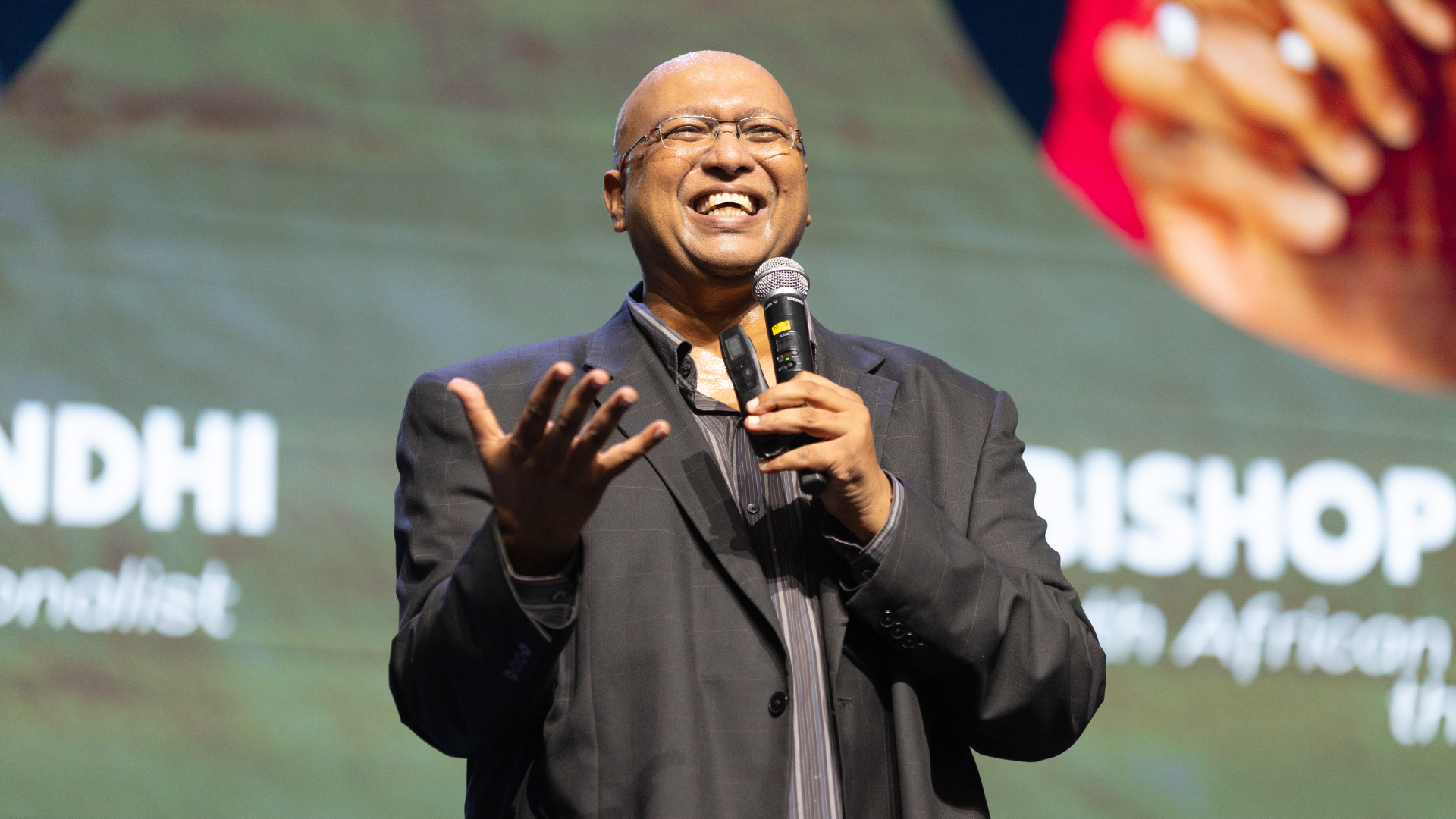
Acts 4:33 also records that "great grace was upon them all." The word mega appears again - this was not ordinary, polite acceptance but extraordinary, all-encompassing welcome. The church of Jesus Christ has no ethnic, cultural, or social boundary; it is one blood-bought community. The failure to practise great grace carries historic consequences. When Mahatma Gandhi a man who had memorised the entire Gospel and wanted to introduce Christianity to India as a means of dismantling the caste system arrived at a church in Durban, South Africa, an usher turned him away with the words, "You don't belong here; go and worship with your people." Gandhi left, and later said: "I'd be a Christian if it were not for the Christians." The cost of that single act of exclusion, in terms of the potential reach of the gospel across an entire subcontinent, is incalculable.
Against that story stands another from the same era. During apartheid, a nine-year-old Desmond Tutu was walking with his mother in Johannesburg when an Anglican priest, Trevor Huddleston, stepped off the pavement and bowed to them a complete reversal of every social norm of the time. That single act of dignifying grace shaped the direction of Tutu's life, leading ultimately to a Nobel Peace Prize and global influence. Great grace is not a programme; it is a posture the willingness to receive and honour anyone who walks through the door.
Reflect on whether there is a person or group you have been slow to welcome or include, and take one concrete action this week to extend grace toward them.
Great Fear: The Reverence That Sustains
The third quality named in Acts 4 is fear, and Acts 5 supplies the immediate context. Ananias and Sapphira whose names mean "God is gracious" and "beautiful" respectively brought a gift with a lie embedded in it. The consequence was severe, and the result was that great fear came upon all the church. The fear described here is not dread of punishment but the deep reverence that comes from understanding that the gathered community is genuinely the house of God - a place where he is present and where his holiness is not incidental. Oswald Chambers distilled this principle into a single line: "When you fear God, you fear nothing else; whereas if you do not fear God, you will fear everything."
A church without the fear of God becomes a church driven by the fear of people susceptible to division, rumour, and the management of reputations. The fear of God, by contrast, creates the atmosphere in which the Holy Spirit works freely. It is the reverence that guards unity, that keeps great grace from becoming mere sentiment, and that holds the community accountable to something greater than its own preferences.
Ask God to replace any fear of people's opinions in your relationships, ministry, or workplace with a genuine, grounding reverence for him.
The Call: Let God Arise in Every Area
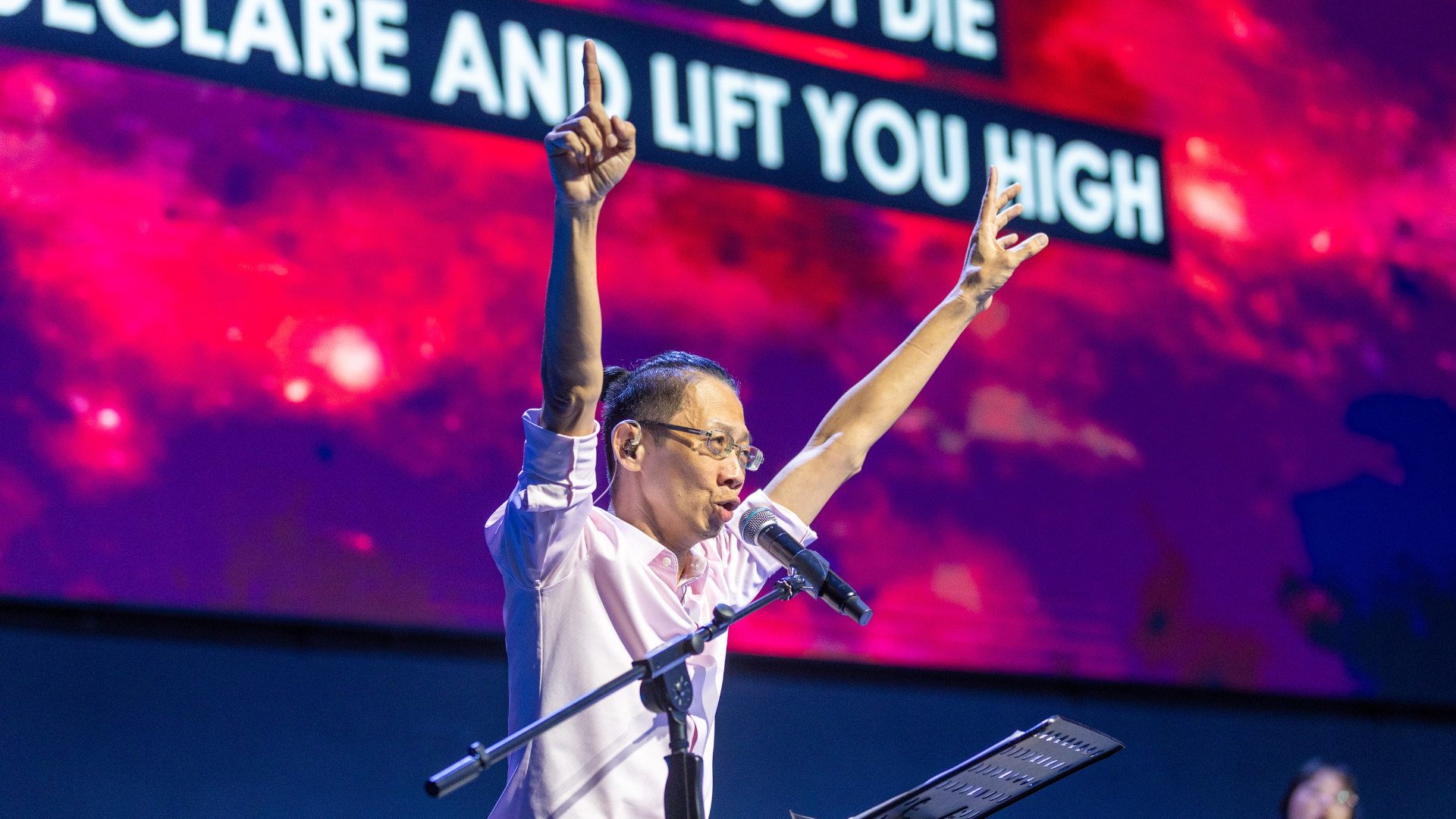
The closing movement of this message draws on Psalm 68:1 "Let God arise" and applies it with deliberate breadth: marriages, finances, relationships, ministries, conversations, and the inner life of thought and well-being. This is not a prayer for God to intervene from a distance but an invitation for the living Christ to become actively present across the full range of daily existence. A great church is not primarily distinguished by its facilities or programmes it is distinguished by the presence of God.
Great power, great grace, and great fear are not three independent targets to pursue separately. They are the natural fruit of a community whose members are genuinely encountering the risen Christ together. When the church testifies truthfully that God is alive, welcomes every person with extraordinary grace, and holds his house in deep reverence, the conditions are in place for God to do what only he can do. The call is simply to arise and to let him.
Close this day by praying the words "Let God arise" over each area of your life by name, surrendering those spaces to his active, living presence.
Life Group Reflection Questions
- Acts 4:32 describes the early church as being "of one heart and one soul," and this message defines unity as the ability to agree in disagreement. Where in your own relationships within the church or outside it do you find that hardest to practise, and what would it look like to choose unity in that specific place?
- The message asks a pointed question: Is God alive in your career, your relationships, your finances, your ministry not just believed in, but genuinely active and real? How would you answer that honestly for the different areas of your life, and what does your answer reveal about where you may need to invite him more deliberately?
- Gandhi reportedly said, "I'd be a Christian if it were not for the Christians," after being turned away from a church door. Have there been moments in your own experience as the one giving or receiving a welcome where the presence or absence of grace made a decisive difference? What does that memory teach you about the weight of ordinary acts of inclusion?
- Oswald Chambers wrote, "When you fear God, you fear nothing else; whereas if you do not fear God, you will fear everything." In what areas of your life do you notice that the fear of people's opinions is shaping your choices more than the fear of God and how might a genuine reverence for him reorder those priorities?
- The message closes with the prayer "Let God arise" in marriages, finances, relationships, ministries, and the inner life. As a Life Group, where do you sense God is being welcomed in, and where do you sense he is being held at a polite distance? What would it take to open those areas more fully to his presence?
Closing Summary
This message traces a single, consistent thread: a great church is not built by human strategy or natural gifting alone, but by three qualities that Acts 4 names explicitly - great power, great grace, and great fear of God. From the unity of heart and soul that made the Jerusalem church a vessel for the Holy Spirit, to the explosive testimony that God is alive, to the radical welcome that receives anyone without distinction, to the deep reverence that guards the community from division and pretence these are inseparable threads in one tapestry. None of the three can be sustained without the others, and all three flow from genuine, ongoing encounter with the risen Christ. The call of this message is to arise not as an institution managing its programmes, but as a living community where God is truly present, truly welcomed, and truly feared so that everyone who encounters it has no choice but to take notice.