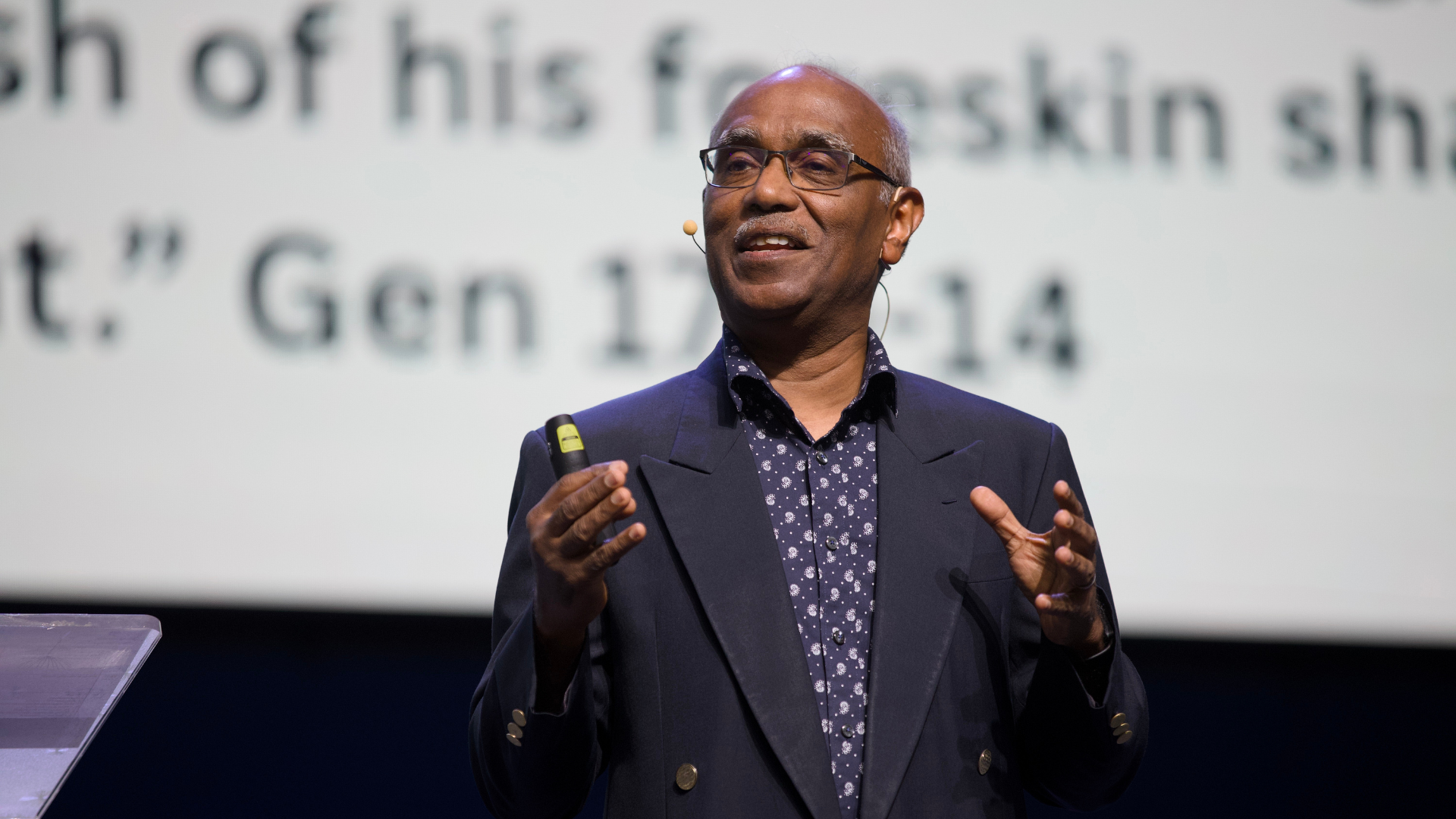
A Circumcised Heart
by Pastor Panir Rajamany
31 May 2026
A Circumcised Heart
Key Texts: Genesis 15; Genesis 17; Deuteronomy 10:16; Jeremiah 9:25–26; Acts 15:1–11; Colossians 2:11; Romans 2:28–29; 1 Samuel 15–16; 2 Samuel 12; Proverbs 4:23; Psalm 51
Theme: God has always desired not an outward religious mark but a circumcised heart — a work initiated in the Abrahamic covenant, fulfilled on the cross of Christ, and continued daily by the Holy Spirit to keep the believer tender, responsive, and quick to repent.
The Abrahamic Covenant: A God Who Cuts First
The story of circumcision begins not with a human initiative but with a divine one. In Genesis 17, when Abraham was ninety-nine years old, God appeared and declared: "I am God Almighty; walk before me and be blameless, that I may make my covenant between me and you." The covenant was God's doing — not Abraham proposing terms to God, but God making binding promises to Abraham and his offspring: fruitfulness, nationhood, the land of Canaan, and the intimate declaration, "I will be their God."
Two chapters earlier, in Genesis 15, the shape of this covenant was already visible. God instructed Abraham to prepare five animals as a sacrifice, laying the pieces in two rows. Then God put Abraham into a deep sleep and walked through the divided flesh alone — as a blazing torch passing between the pieces. In ancient covenant-making, both parties walked through the cut flesh, binding themselves to fulfill their respective obligations. But here, only God walked through, signifying that he was undertaking to uphold both parts of the covenant. This is the foundation of grace: God commits himself to give Abraham the capacity to keep what God requires. The covenant rests entirely on God's faithfulness, not on human performance.
Application:
Rest today in the truth that your covenant with God rests on his faithfulness, not your own — and thank him specifically for one way his grace has sustained you when your own strength failed.
The Significance of Physical Circumcision
Physical circumcision, commanded in Genesis 17, carried layered meaning far beyond the merely ceremonial. It was to be performed on the eighth day — the number eight signifying new beginnings, marking the start of a covenant life between God and the child. There is also a striking medical dimension: research has confirmed that on the eighth day, levels of Vitamin K necessary for blood clotting are at their peak, and the nerve endings are least developed, making it the day of minimum pain and optimal healing. God thought through every detail of his command.
The mark was permanent and indelible — it could not be undone. It required the cutting of flesh, echoing the covenant-cutting of Genesis 15. And it functioned as a dividing line: in the Old Testament, the circumcised belonged to God; the uncircumcised did not. When the young David stood before Goliath, his confidence rested not on skill with a sling but on covenant identity. He challenged "this uncircumcised Philistine" not merely as an insult, but as a theological statement: I am in covenant with Almighty God, and you are not. It was not the stone that killed Goliath; it was David's faith in a covenant-keeping God.
Application:
Reflect on the covenant you have with God through Christ, and let that identity — not your circumstances or your performance — be the ground on which you stand today.
God's True Intent: The Heart, All Along
Even as God instituted physical circumcision, the prophets made clear that the outward mark was always pointing toward something deeper. Deuteronomy 10:16 states plainly: "Circumcise therefore the foreskin of your heart, and be no longer stubborn." This is not a New Testament innovation; the circumcision of the heart is declared in the Old Testament itself, alongside the very institution of the physical rite. The physical sign was a daily reminder — a mark on the body to point the conscience toward what God truly required: a yielded, responsive heart.
Jeremiah pressed the point further: "Behold, the days are coming, declares the Lord, when I will punish all those who are circumcised merely in the flesh — for all the house of Israel are uncircumcised in heart" (Jeremiah 9:25–26). A nation could maintain the outward mark while their hearts remained hardened and far from God. The prophetic tradition consistently warns that ritual without heart transformation is a form of spiritual self-deception. Like every shadow in the Old Testament — the festivals, the sacrifices, the priesthood — physical circumcision was a type pointing forward to a fulfilment that Christ alone could bring.
Application:
Ask the Holy Spirit to show you any area of your spiritual life where outward observance has become a substitute for genuine heart engagement with God.
Confusion in the Early Church: Grace vs. the Law
When the gospel began to spread beyond Jewish communities, the question of circumcision became a flashpoint. Acts 15 records the tension: men from Judea were insisting, "Unless you are circumcised according to the custom of Moses, you cannot be saved." Believers from the party of the Pharisees agreed, arguing that Gentile converts must be circumcised and keep the law of Moses. The implication was that the finished work of Christ on the cross was insufficient — that something more was needed.
Peter's response was decisive. Standing before the Jerusalem council in Acts 15:11, he declared: "We believe that we will be saved through the grace of the Lord Jesus, just as they will." Salvation is entirely by grace, entirely through Christ, entirely through faith — not supplemented by any physical rite or human work. This clarification was not only pastorally significant; it was the defence of the gospel itself. Any addition to the finished work of Christ is, in effect, a diminishment of it.
Application:
Examine whether there is any area in which you are unconsciously treating your spiritual standing before God as something you must earn or maintain by your own effort — and return to the simplicity of grace.
Circumcision Fulfilled in Christ: The Cross
Colossians 2:11 provides the New Testament lens through which physical circumcision is understood and fulfilled: "In him you were circumcised with a circumcision made without hands, by putting off the body of the flesh, by the circumcision of Christ." This is a spiritual surgery — performed by the Holy Spirit, without cutting of flesh, without blood. It points directly to the cross, where the ultimate price was paid.
Under the old covenant, the uncircumcised were to be "cut off" from the people — separated from the covenant, separated from God. On the cross, Jesus bore exactly that consequence. When he cried, "My God, my God, why have you forsaken me?" he was experiencing the weight of being cut off — the pain of eternal separation — so that the believer would never have to bear it. Romans 2:28–29 draws the conclusion: "Circumcision is a matter of the heart, by the Spirit, not by the letter." The cross is the place where the flesh — not the body, but the worldly appetites and sinful desires that drive the fallen nature — is crucified. Every believer who belongs to Christ has, through him, undergone this circumcision.
Application:
Bring one specific area of fleshly appetite or worldly desire before the cross today, and ask God to deepen in you the reality of what was cut away there.
Guarding the Heart: The Source of All Life
The reason God is so concerned with the heart is stated plainly in Proverbs 4:23: "Guard your heart with all diligence, for from it flow the springs of life." The word guard is a military term — the posture of a soldier defending something of great strategic importance. The heart, which in scriptural usage encompasses the thought life, the will, and the inner disposition, is the source from which all of life flows. What takes root in the heart will eventually shape the words, the choices, and the direction of a life.
The image of a spring is instructive: the quality of water flowing downstream depends entirely on the purity of the headwater at the source. A guarded, godly thought life produces a life of blessing and vitality — one that waters not only the individual believer but those around them. The enemy knows this, which is why the attack consistently targets the thought life. God reinforces this from his own perspective: when he sent Samuel to anoint a new king in 1 Samuel 16:7, his instruction was precise — "Do not look on his appearance... for the Lord sees not as man sees: man looks on the outward appearance, but the Lord looks on the heart."
Application:
Identify one specific pattern of thought — a recurring worry, resentment, or temptation — that you have allowed to flow unchecked, and take it captive before God today.
Four Marks of a Circumcised Heart
Four marks characterise the circumcised heart. The first is that it does not desire the things of the flesh — the lust of the flesh, the lust of the eyes, and the pride of life no longer hold the same power, because the body of flesh has been cut away in Christ. The second mark is an absence of stubbornness and rebellion. The Old Testament prophets repeatedly warned against a stiff-necked people who resist God's guidance and harden their hearts when he speaks. The circumcised heart remains pliable and cooperative when God leads. The third mark is that it does not seek its own way. Jonah is the defining illustration: called to Nineveh, he fled in the opposite direction. The fallen nature consistently prefers its own agenda; the circumcised heart has learned to release that preference and yield to God's.
The fourth mark is perhaps the most distinctive: a circumcised heart is quick to repent. This is the quality that most clearly sets apart a heart that is genuinely responsive to God. When the Holy Spirit speaks — through Scripture, through a conviction, through a brother or sister in the faith — the circumcised heart does not deflect, delay, or justify. It responds with honesty and openness. This quality is precisely what God points to when he commands in Deuteronomy 10:16: "Circumcise the foreskin of your heart and be no longer stubborn."
Application:
Hold each of these four marks honestly before God today, and ask him to show you which one most needs his work in your heart in this season.
Saul and David: Two Hearts Compared
The contrast between King Saul and King David is the most vivid illustration in Scripture of what a circumcised heart is — and is not. In 1 Samuel 15, God commanded Saul to destroy the Amalekites completely. Saul partially obeyed, sparing the king and the best livestock. When the prophet Samuel arrived and heard the bleating of sheep, Saul's first response was not confession but a bold claim: "I have carried out the commandment of the Lord." Confronted with the evidence, he shifted the blame to his men, then immediately spiritualized the disobedience — the animals were spared to sacrifice to "your God," he said. Not "my God." This is the pattern of an uncircumcised heart: deflection, self-justification, and the use of religious language to cover a wrong motive.
David's response in 2 Samuel 12 could not be more different. The prophet Nathan came with a parable about a rich man who stole a poor man's only sheep. David was outraged. When Nathan declared, "You are the man," David had every power and every motive to reject the accusation. Instead, the first words out of his mouth were: "I have sinned against the Lord." Immediately. No deflection, no counter-argument, no blame shifting. His repentance was genuine and deep — Psalm 51 records the full weight of it. David was not sinless; his failures were serious and many. But God called him a man after his own heart — not because he never sinned, but because when confronted with his sin, he owned it completely and returned to God with everything he had.
Application:
The next time the Holy Spirit puts his finger on something in your life, resist the instinct to deflect or justify — respond immediately with the words David used: "I have sinned against the Lord."
Life Group Reflection Questions
Genesis 15 shows God walking through the divided flesh alone — committing himself to fulfil both parts of the covenant with Abraham. What does it mean to you personally that your relationship with God rests on his faithfulness rather than your own? Where in your life do you find it hardest to rest in that truth rather than trying to earn or maintain your standing before God?
Deuteronomy 10:16 commands: "Circumcise the foreskin of your heart and be no longer stubborn" — and this call appears in the Old Testament alongside the very institution of physical circumcision. In what areas of your life have you sensed God speaking to you about something that needs to change, and what has your response been — receptive, or resistant?
Proverbs 4:23 instructs believers to guard the heart "with all diligence, for from it flow the springs of life." The word guard is a military term. What does your current practice of guarding your thought life actually look like — and what would a more deliberate, soldier-like defence of your inner life require you to change?
Four marks of a circumcised heart are described: no desire for fleshly things, no stubbornness, not seeking its own way, and being quick to repent. Which of these four most honestly describes an area where your heart still needs work — and what does that pattern look like in the specific circumstances of your daily life?
The contrast between Saul and David is stark: Saul blamed others and spiritualized his disobedience, while David said immediately, "I have sinned against the Lord." Think of a recent situation where the Spirit, Scripture, or someone close to you put their finger on something that needed to change. Which pattern did your response more closely resemble — and what would a David-like response have looked like?
Closing Summary
This message traces a single, consistent thread: God has always been after the heart. Physical circumcision, instituted in the Abrahamic covenant, was never an end in itself — it was a permanent mark pointing toward what Deuteronomy and Jeremiah declared plainly: God desires a circumcised heart. That desire found its fulfilment on the cross of Christ, where the body of flesh was put off and the believer was brought into covenant with God through grace alone. The circumcised heart is not sinless, but it is characterised by four qualities: freedom from the dominance of fleshly desire, an absence of stubborn rebellion, a yielded will that does not insist on its own way, and above all — a readiness to repent quickly and completely when God speaks. David, not Saul, is the model. The call of this message is to open the heart fully to the ongoing work of the Holy Spirit — the daily, gentle surgery that keeps the believer tender, honest, and close to God.


